The Creative Process in 5
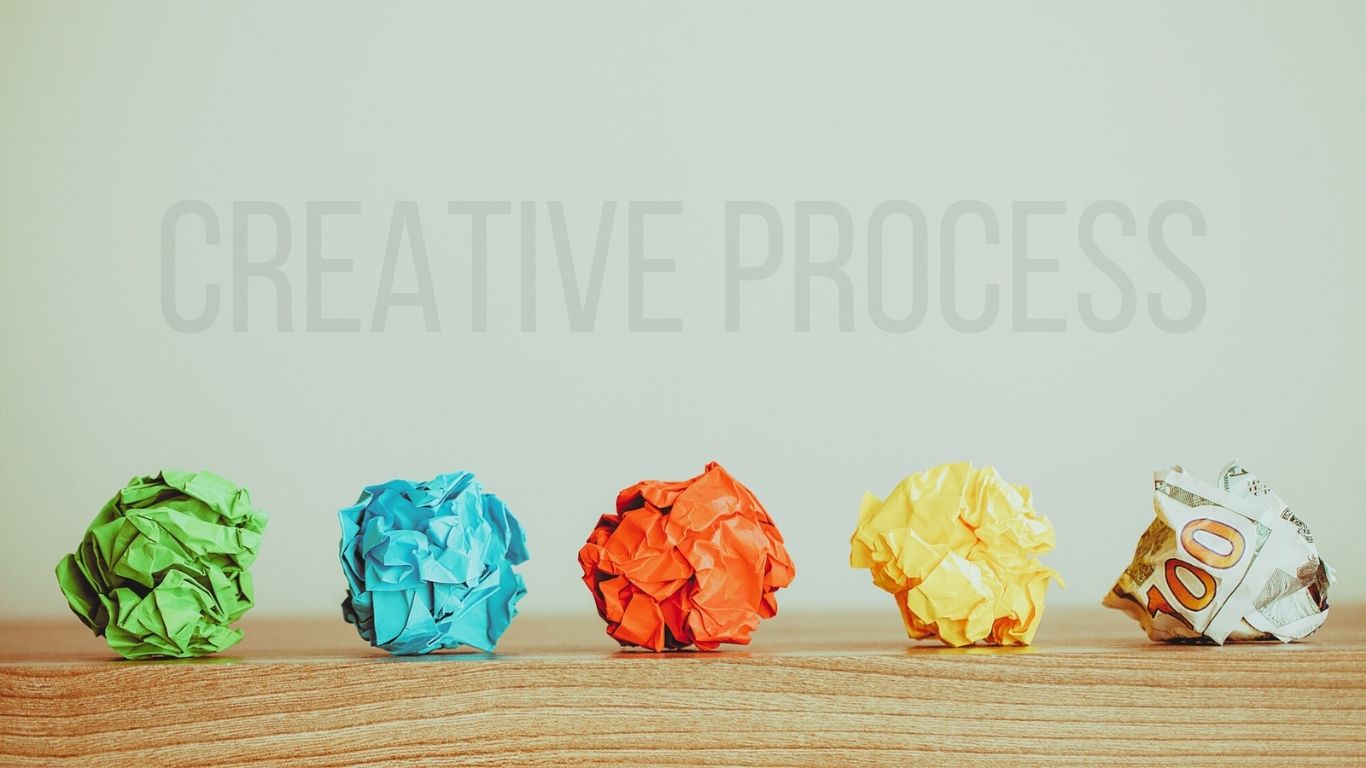
Creativity is not magic, it’s not genetic, it’s not quick and it isn’t easy. Creatives spend years and thousands of hours of on-the-job training to build up the skills needed to thrive in the creative arena. This article will outline a five-step process a majority of creatives go through when generating ideas and creating successful work. Becoming familiar with these 5 steps will not only help you understand the creatives you work with but to be more creative yourself in any industry.
Step One: Preparation
Right out of the gate it’s important to fully immerse yourself in the material at hand. In order to do this a creative brief should be created or provided that includes all the information that is needed for the project to achieve success. The creative brief also should contain information that will allow the creative to gather inspirations from other sources. If you’re a writer, you’re reading other works in the same area. If you’re a designer, you’re looking at other pieces of work that inspires you and are inline with your target audience. That inspiration can come from book covers, your own past successes and failures, social media examples, movies, etc.
Keys to Success
It’s crucial that a thorough creative brief is completed and distributed to all members of the creative team before a project is started. The assets and thoughts generated from this stage of the process all must be aligned to the “Why” of the project. What is the main objective of the project? Who are we speaking too? The creative brief has to set the expectations and is truly the road map to success and must be present before true creative work can begin. This cannot be overstated.
Step Two: Incubation
This step is where the “magic” happens for most creatives. After all the information from the Preparation phase is absorbed, the next step is to let the ideas flow. When I’m walking and allow myself some time to reflect on the problem solutions seem to come more easily. Everyone has their own safe space for reflection and thought, the key is making time to get there – allowing yourself to turn everything off and just think.
Step Three: Exploration
This is the lightbulb moment – the moment when your great idea hits like a thunderbolt. As a Colleague once said to me, the best ideas come when two unrelated ideas collide in the mind to create something amazing. When this moment hits, a designer hits their sketchbook or keyboard to start committing their idea to paper (or pixel).
Keys to Success
In this phase it’s important to remember that no idea is a bad one. You want all ideas on the table and every creative should have input and not be made to feel that they could possibly pitch a “stupid” idea. If you are a leader who creates an environment where your creative staff are scared to pitch pie in the sky ideas then YOU are the stupid one. More importantly, you’re missing out on some great ideas for the problem at hand or future projects that need solutions.
Step Four: Evaluation
This is the hard part, where you look at all the ideas on the table and narrow it down to which ones work and which ones don’t. This is the phase when feedback from all in-house decision makers comes into play. The creative decision makers weigh different options and decide what works for the problem at hand and adjust things accordingly, ultimately landing on a couple of solutions to move onto the final phase successfully and aligned with.
Keys to Success
All creative decision makers need to be engaged at this step. I’ve seen this phase happen after the final phase (Implementation) and it’s never produced a good work flow. You don’t want any of the momentum and excitement generated from the first 4 steps to be killed by a last minute change that unravels the project direction. To avoid that issue, all stake holders must submit their opinions and critiques before the project can move onto step 5 (implementing) so their concerns can be reflected within the final creative solution.
Step Five: Implementation
This is the part where the final product gets produced, where things like skill, experience, knowledge, and hours of work come in to play. This is the writer’s final draft, the artist’s finished piece, the satisfaction of a job well done that makes all the hours of hard work worth it.
Keys to Success
Any changes when work is routed after the Implementation phase should be minimal – moving images slightly, tweaking headline sizes, tightening up copy blocks, maybe a couple of text changes. This is NOT where a whole new concept appears out of thin air from a disengaged participant. That is not the way to effectively be in the business of creativity.
Results May Very
The creative process is not linear, or predictable. There’s a lot of opinions and it’s key to keep those various opinions in check and towards the front of the process. It might take days, or weeks, or months, and you might have to go back and forth and repeat steps to get the desired outcome. Sometimes deadlines force us to accelerate the process, but usually the more time we spend with the process, the better the ideas will be. As I say often, you can have something fast or something great, but you can’t have something great fast – that is called mediocrity and is not where you want your brand or marketing essentials to live.